
August 7, 2026 · DNA repair, longevity and healthy ageing
Can Better DNA Repair Extend Healthspan?
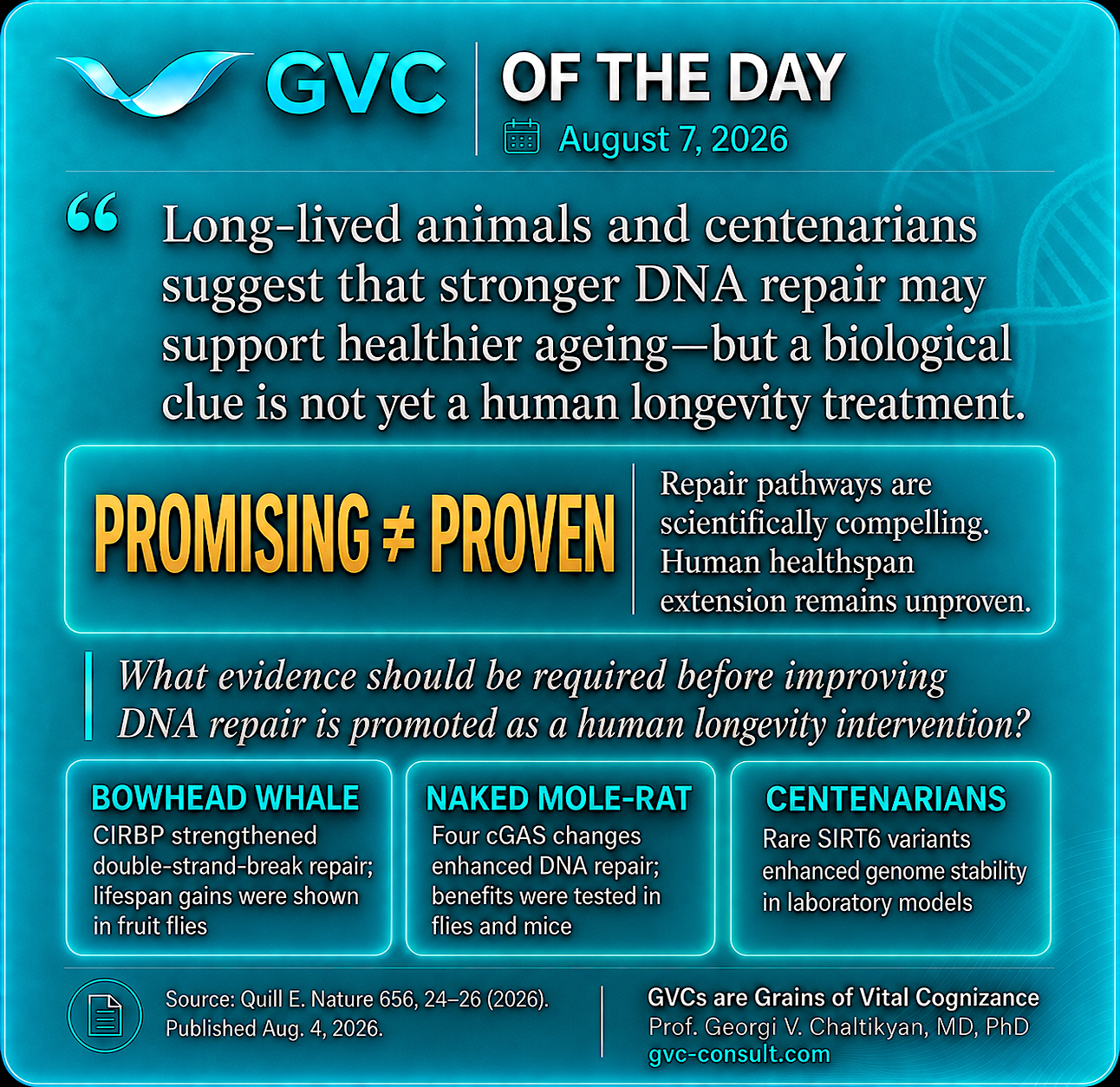
A new Nature feature explores whether enhancing DNA-repair pathways could eventually extend healthspan. Evidence from long-lived species, centenarians and experimental models converges on one intriguing possibility: better genome maintenance may be one component of longer, healthier life.
Bowhead-whale cells demonstrated enhanced capacity and fidelity in repairing DNA double-strand breaks. Higher CIRBP expression supported genome stability, while CIRBP overexpression extended lifespan in fruit flies. In naked mole-rats, four evolutionary amino-acid changes transformed cGAS from a suppressor into an enhancer of DNA repair, producing benefits in flies and aged mice.
Human genetics provides another clue. A rare SIRT6 allele enriched among centenarians enhanced double-strand-break repair, genome stability and cancer-cell suppression in laboratory studies. Inhibiting the DREAM repressor complex also increased multiple repair capacities in human cells and reduced DNA damage in experimental models.
The science has moved beyond simple association—but it has not established a human longevity intervention. Before enhanced DNA repair is promoted clinically, we need evidence that repair is accurate, reproducible across tissues and pathways, and safe over the long term. Cancer, clonal selection and unintended genomic effects require particular scrutiny. Ultimately, human trials must demonstrate improvements in function, morbidity and healthspan—not merely molecular damage.
DNA repair is not a simple volume control: the pathway, tissue, timing and type of damage all matter. For now, the evidence is compelling—but promising does not mean proven.