
August 26, 2026 · Medical robotics, procedural autonomy and the healthcare workforce
A Robot Can Draw Blood. What Comes Next?
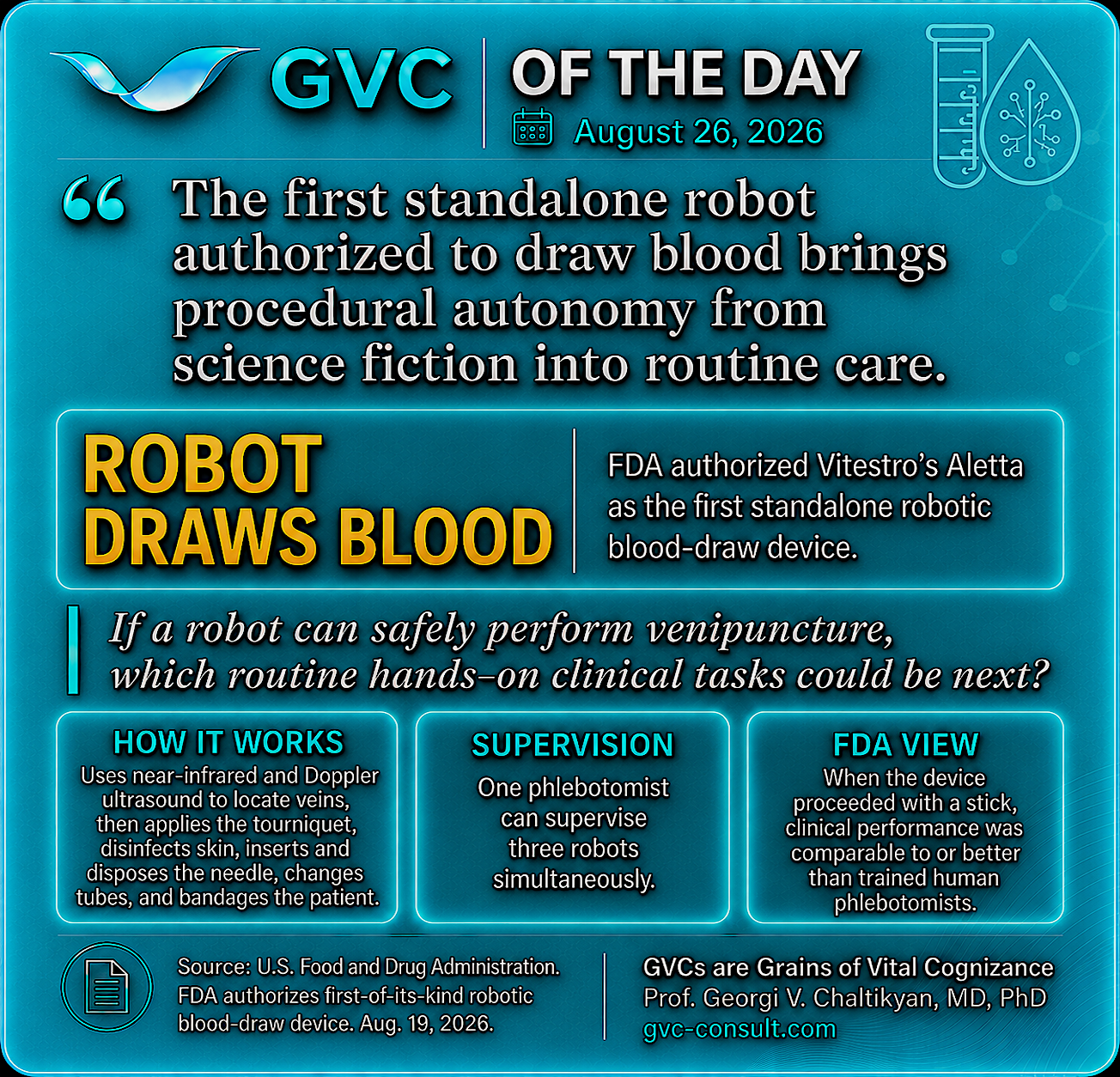
Aletta is authorized for adults in outpatient settings. A trained phlebotomist initiates each session, remains available to respond to problems and can supervise up to three devices simultaneously.
The robot uses near-infrared imaging and Doppler ultrasound to distinguish a suitable vein from arteries. If it cannot identify an appropriate vein, it does not attempt the procedure. Once it proceeds, it applies the tourniquet, disinfects the skin, inserts and disposes of the needle, changes collection tubes and places a bandage.
The FDA reports that when Aletta proceeded with a needle stick, its successful blood-draw rates were comparable to or better than those of trained human phlebotomists. Device-related adverse events were uncommon and mild.
The qualification matters: this does not mean that every attempted robotic blood draw succeeded, or that the device operates without human oversight. The FDA authorized Aletta through the De Novo pathway for new low- to moderate-risk devices and established special controls for its use.
My takeaway: this development matters beyond phlebotomy. Healthcare automation has largely been discussed as a transformation of cognitive work—diagnosis, documentation, triage and decision support. Robotics combined with AI may now move automation from cognitive assistance to procedural assistance and, eventually, supervised procedural autonomy.
That transition will require more than technical performance. It raises questions about workforce redesign, supervision, training, liability, procedural safety, productivity and patient acceptance.
GVCs are Grains of Vital Cognizance, by Prof. Georgi V. Chaltikyan, MD, PhD.