
September 24, 2026 · Clinical AI, global health and local relevance
Can Medical AI Leapfrog Health-System Infrastructure?
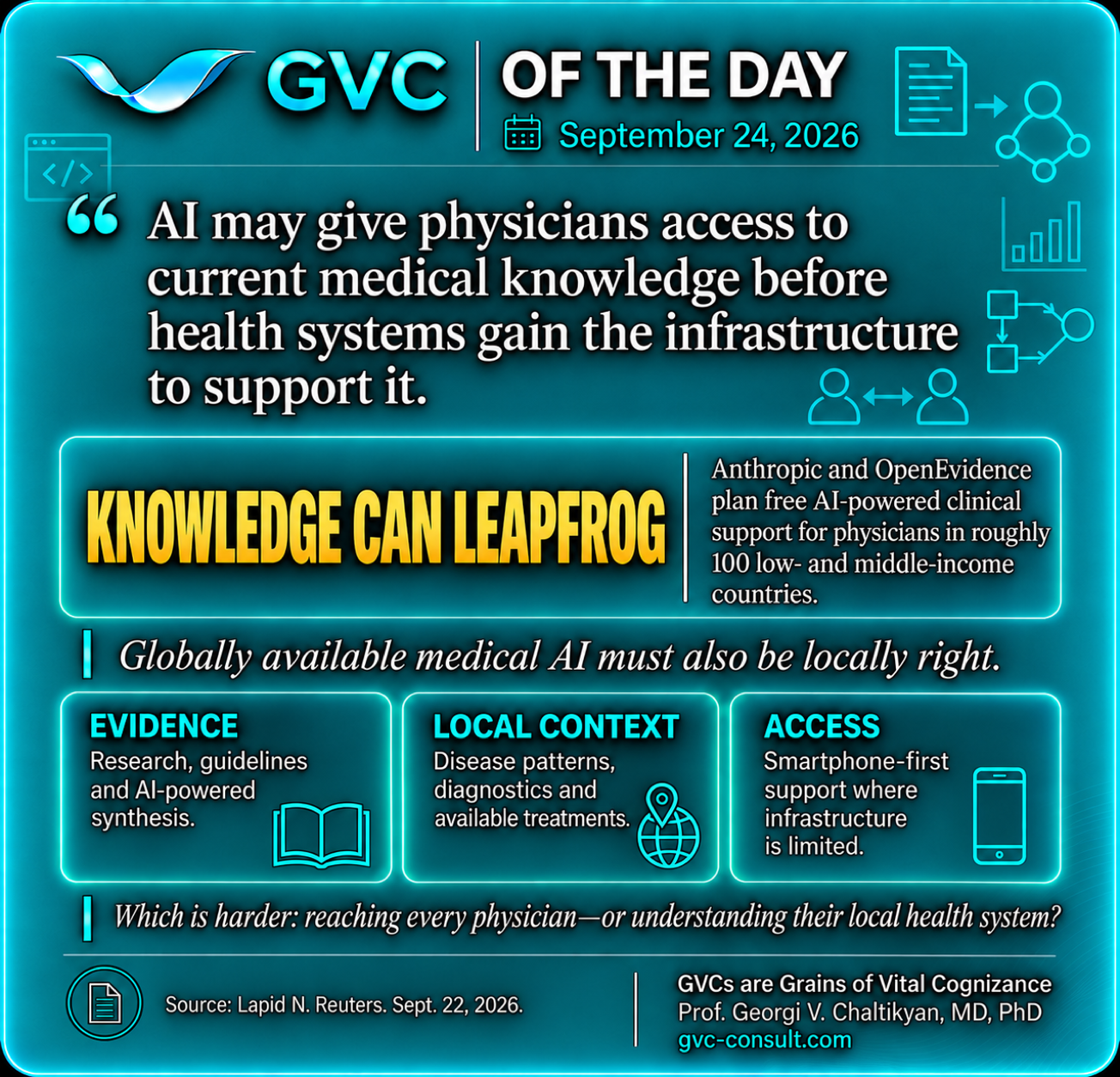
Anthropic and OpenEvidence are partnering to roll out free AI-powered clinical decision support for healthcare providers in roughly 100 countries, including low- and middle-income settings. Reuters reports that the initiative draws on peer-reviewed medical research and treatment guidelines and is intended to adapt to local circumstances.
Those circumstances matter: disease patterns, available diagnostics, treatments and healthcare infrastructure differ greatly between settings. A smartphone can provide an interface to medical knowledge even where specialist access, journal subscriptions and conventional Digital Health infrastructure are limited.
My takeaway
This creates a possibility of leapfrogging. Access to AI-supported evidence may spread faster than the infrastructure that has traditionally delivered clinical decision support. But global availability alone is not clinical reliability. Advice built mainly around high-income-country assumptions may be inappropriate where tests, medicines or referral pathways differ.
The meaningful test will be whether the tool helps physicians make better decisions in the health systems where they actually practise. Local evaluation, clinician feedback and transparent limits will matter as much as reach.
GVCs are Grains of Vital Cognizance, by Prof. Georgi V. Chaltikyan, MD, PhD.